Things You Must Know about Pediatric First Aid and CPR Training – Infographic

The infographic titled “Info about EMSA Approved Pediatric CPR with AED and First Aid Training”, talks about pediatric first aid and CPR training. Through this informative infographic, you’ll get a brief idea about the basics of pediatric first aid and CPR, pediatric first aid and CPR training for infant, child and adult, who can take pediatric first aid and CPR training, and advantages of pediatric (infant, child and adult) first aid training.

EMSA (Emergency Medical Services Authority) approved Pediatric CPR and First Aid training usually covers: school bus driver training, Childcare Licensed Pediatric CPR and First Aid (4 hours of CPR and 4 hours of First Aid) and Childcare Prevention of Illness and Injury (8 hours). The training is really helpful to learn how to treat the most common injuries and emergencies. Various important things covered under Pediatric First Aid and CPR training include scene assessment and barriers, primary and injury assessment, chocking management, controlling bleeding, illness assessment, etc.

The Pediatric First Aid and CPR training is perfect for family childcare or in home providers, preschool providers, afterschool providers, childcare centers, etc. To know more about the benefits of taking Pediatric First Aid and CPR training, please refer the given infographic.

Pediatric First Aid and CPR Training

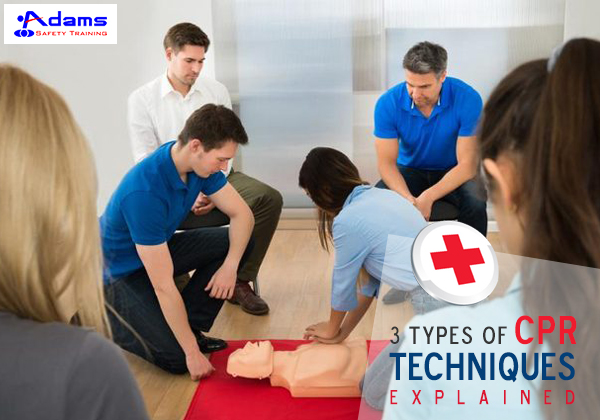
3 Types of CPR Techniques Explained

Cardio-pulmonary resuscitation (CPR) is a lifesaving technique useful is various emergency situations such as a cardiac arrest, heart attack or near drowning. This technique often includes a combination of chest compression and artificial ventilation. It helps to preserve intact brain function and restore the blood circulation and breathing to the vital organs of the patient’s body. CPR is very useful for those who become unresponsive with no breathing or abnormal breathing. Below mentioned are some of the important CPR techniques, have a look:

High-Frequency Chest Compressions: High-Frequency Chest Compressions is an important CPR technique that helps to improve resuscitation from cardiac arrest.

Open-Chest CPR: Open chest CPR is a technique in which the heart is accessed through a thoracotomy. Compressions are performed using the thumb and fingers, or with the palm and extended fingers against the sternum. This technique helps to generates forward blood flow and coronary perfusion pressure.

Interposed Abdominal Compression CPR: Interposed Abdominal Compression or IAC CPR is basically a 3-rescuer technique-an abdominal compressor, the chest compressor and the rescuer providing ventilations. This technique includes, conventional chest compressions combined with alternating abdominal compressions. The IAC CPR helps to increases diastolic aortic pressure and venous return, leading to improved coronary perfusion pressure and blood flow to other vital organs.

CPR Techniques

There are various other CPR techniques that can be learned in a CPR and First Aid Training program.

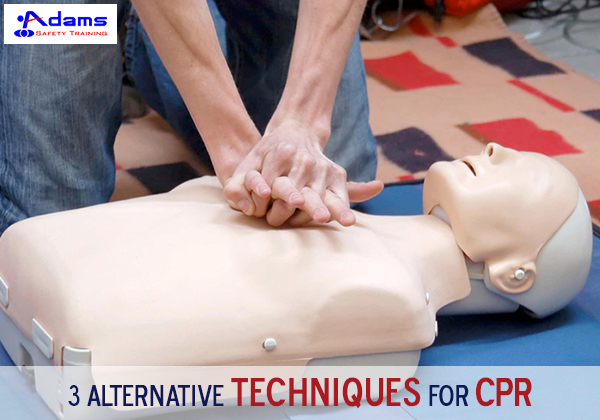
3 Alternative Techniques for CPR

The conventional CPR practice involves manual chest compressions along with rescue breaths. Over the years, a variety of alternatives to conventional CPR have been developed with intent to augment cardiac output resuscitation from cardiac arrest. Here is the list of some alternative devices and techniques for CPR:

Impedance Threshold Devices: The combination of Impedance Threshold Devices or ITD with active compression-decompression CPR is a better alternative to conventional CPR in settings with available equipment and well-trained CPR professionals.

Mechanical Chest Compression Devices: Although, manual chest compressions are considered as the standard of care for the treatment of cardiac arrest, the mechanical chest compression devices may be a reasonable alternative to conventional CPR in certain conditions where the delivery of high-quality manual compressions may be challenging or dangerous for the provider.

Extracorporeal Techniques and Invasive Perfusion Devices: Extracorporeal Techniques and Invasive Perfusion Devices or ECPR are another better alternative to conventional CPR for patients who have a cardiac arrest. These devices are also beneficial for the patients for whom the alleged etiology of the cardiac arrest is potentially reversible.

Adult CPR & First Aid

As compared to conventional CPR, all the above mentioned techniques and devices require specialized equipment and CPR training.

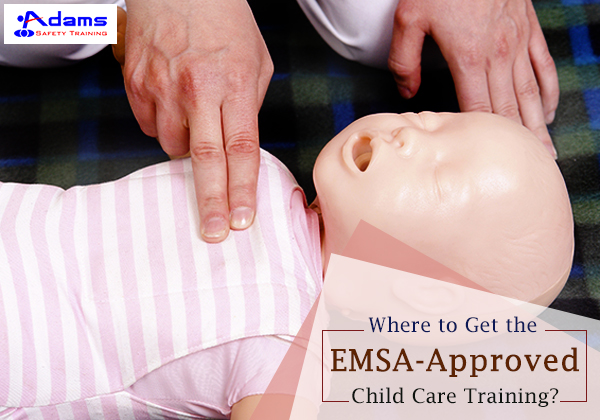
Where to Get the EMSA-Approved Child Care Training?

In order to find the EMSA approved child care training program, you can directly go to the EMSA website. The website has an up-to-date list of current approved training programs for child care First Aid, CPR, and Preventive Health and Safety Practices training. Search for the program that provides training in your area or in a nearby area. It is important to note that EMSA does not list every training instructor in the state. They only provide the directors name and the main business numbers of the approved training programs.

After finding the most suitable program, you can directly call the numbers provided on the website to schedule your training. Some of the EMSA approved training programs for child care First Aid and CPR provide state-wide training in various communities. These programs have around 800 telephone numbers. You can call any of the numbers to get the numbers of instructors in your area.

where-to-get-the-emsa-approved-child-care-training

You can also take your child care First Aid and CPR training from the American Red Cross and the American Heart Association. Although, these do not come under EMSA and do not have to purchase stickers, send rosters, or be audited by EMSA, but they must abide by the EMSA standards for training. If they do not, then they can be reported to the AHA government liaison.

Some Important FAQs About EMSA Child Care Training – Video

The video titled as “EMSA Childcare Training FAQs” talks about some of the frequently asked queries related to EMSA Childcare Training. These include the following:

How long should the childcare training be – Childcare training should be:

4 hours of training for CPR-adult, child and infant which includes all age AED training
4 hours of training for child care first aid
7 hours of training on preventive Health and Safety practices training.

Can online courses for the childcare provider training be taken? – Online courses are not allowed for carrying out any of the childcare training.

Can shortened hours of classes be taken in child care first aid and CPR? – The training for child care first aid and CPR is required to be a total of 8 hours and the training must be repeated every two years, at the minimum. The Preventive Health and Safety Practices Course is a one-time only requirement and must be at least 7 hours long.

For further information, you can refer the given video.

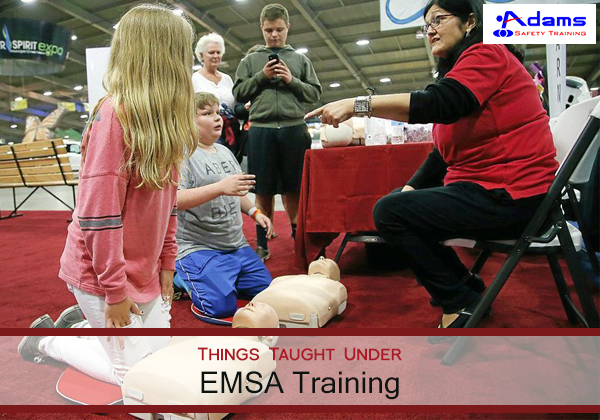
Things Taught Under EMSA Training

EMSA or Emergency Medical Services Authority training generally include the below mentioned programs:

  • Pediatric first aid (4 hours): Pediatric first aid mainly focuses on emergency situations faced by those who look after young children and infants, including pre-schools, private nursery schools, day nurseries, child minders, etc. This training provides the ability to perform first aid for an infant and a child, administer emergency first aid to an infant and a child with a chronic medical condition or sudden illness, etc.
  • Pediatric (Infant, Child and Adult) CPR (4 hours): Infants, children and adults have different needs when it comes to CPR. The attendants can learn the various useful CPR techniques to save a life.
  • Preventive health and safety training program (8 hours): It covers preventive health practices and policies regarding illness, injury, health and safety. The course also includes the new 2016 Childcare Nutrition program.

EMSA Training

EMSA Training courses usually cover scene assessment & barriers, primary & injury assessment, choking management, control of bleeding, shock management, continuing circle of care, illness assessment, respiratory problems, poisoning and allergic reactions, diabetic emergencies, seizures, child abuse, motor vehicle safety, spinal injuries & head injuries, fractures & dislocations, and more.

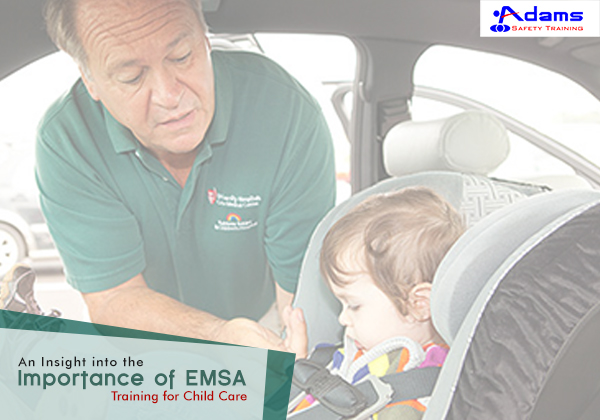
An Insight into the Importance of EMSA Training for Child Care

EMSA or Emergency Medical Services Authority training is a program designed to teach pre-hospital emergency medical care. It helps the professionals, especially those who are involved in child care jobs to respond correctly and quickly in an emergency situation. If you are looking for a pediatric first aid, pediatric CPR and preventive health and safety training program for the licensed child care setting, make sure it is approved by the EMS Authority.

Though, the American Heart Association and the American Red Cross (ARC) do not come under EMSA oversight, both the training programs must provide the child care training according to the EMSA standards. Their instructors must abide by the EMSA standards for training. They must provide the 8-hour child care provider pediatric first aid and CPR course.  If they do not, then they can be reported to the AHA government liaison.

EMSA Training

Furthermore, every 2 years, the EMSA Licensed child care providers must renew their training. To renew the training, they need to complete 4 hours of pediatric first aid and 4 hours of pediatric CPR, which also includes adult CPR and infant, child, and adult AED training and other related topics.

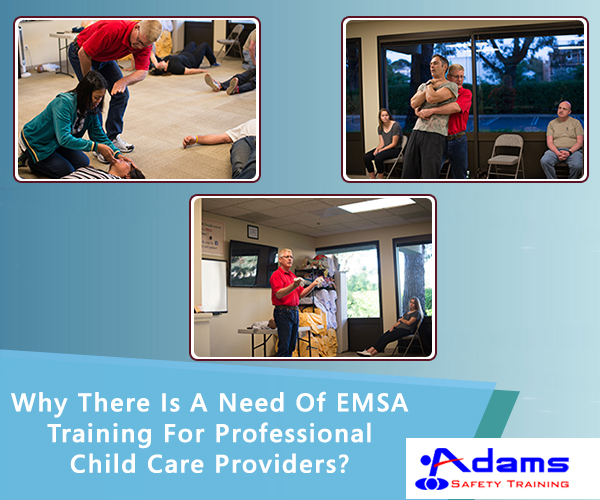
Why There Is A Need Of EMSA Training For Professional Child Care Providers?

EMSA or Emergency Medical Services Authority training is a very beneficial and important form of training, especially for the professionals who are involved in child care jobs. Because of the job responsibilities or regulatory requirements, the professional child care providers must be aware of how to respond actively, accurately and quickly in an emergency situation.

EMSA training is usually comprised of programs like prevention of Illness and Injury, health and safety, first aid and CPR training. It is usually a 16 hours of training, which consists of 8 hours of First Aid & CPR Training and 8 hours of Preventive Health & Safety Training.

Need Of EMSA Training For Professional Child Care Providers

This type of training is really beneficial for childcare providers as it teaches them all the skills and tips to respond quickly and manage illnesses and injuries in a child or infant in the first few minutes before any professional medical help arrives. Gaining a knowledge and skill of First Aid, CPR, AED, child and infant safety checklist and other life saving techniques can really help in saving a life.

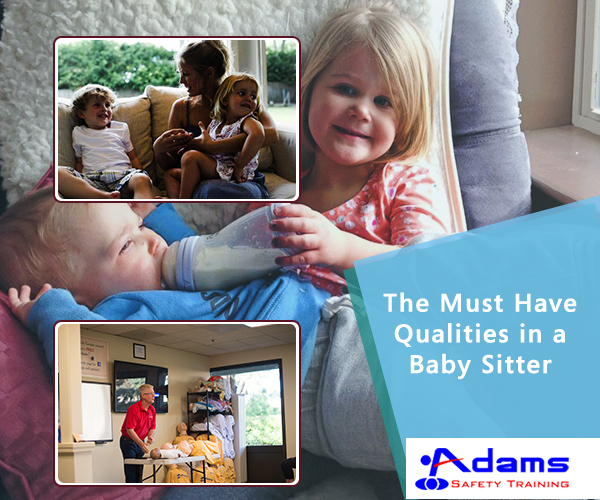
The Must Have Qualities in a Baby Sitter

A person who takes care of children on behalf of their parents or guardians is known as a baby sitter. Baby sitters are responsible for taking care of children and supervising them in absence of their parents, on a temporary basis. While choosing a baby sitter to take care of your child, make sure to check out the below mentioned qualities in him/her:

Playful: A baby sitter should have a playful personality with good imagination power. He/she should be able to create a fun, healthy and active environment for your kids.

Child and Babysitting Safety: Accidents are bound to happen anytime and anywhere. The baby sitter should be able to take the right action at the right time. It is basically a 3 to 4 hour class intended for kids between 12 – 16 years old who want to do Baby Sit job. Therefore, make sure that the baby sitter has taken child and babysitting safety training.

Experience: It is better to hire an experienced baby sitter to take care of your kids. The experience in babysitting assures that the person has all the required skills, knowledge and ability to make the best decisions while on the job.

Qualities in a Baby Sitter

Make sure to choose a perfect babysitter with all the above mentioned qualities so that you’ll be assured of the utmost safety and security of your kids.

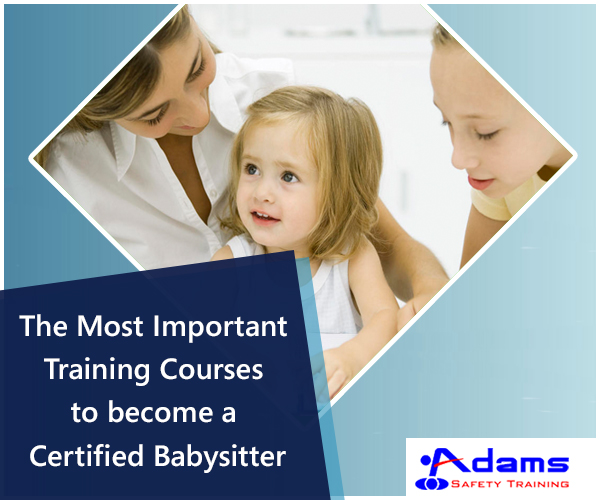
The Most Important Training Courses to become a Certified Babysitter

Whether you love being with kids or are simply looking forward to make some extra cash, babysitting is an important and responsible job to do. Babysitting certifications are an important aspect of getting your job and if you’re aspiring to become a babysitter, go through these training courses and certifications to make you a better caregiver:

Child and Babysitting Safety (CABS) Training is the most important one if you don’t want your application to be rejected from your clients. Parents want to entrust their kids to a babysitter who is trained in first aid, CPR and child care skills and the CABS training is a must to achieve that level of confidence.

If you want to become a professional babysitter with younger kids, you’ll need to undergo ‘Infant Care Training’ that specifically focuses on infant care. Many approved organizations run comprehensive classes that will train you with each and every aspect of infant care. You’ll be better suited to care for your tiniest charges after receiving basic infant care training.

Last but definitely not the least is the ‘Water Safety and Lifeguard Training’. You don’t want to put your clients’ kids at risk if you’re visiting a beach or lake with them or even when they’re playing in the backyard pool. You should be well-trained to handle the emergency cases that can happen nearby water bodies.

Important Training Courses to become a Certified Babysitter

Going through these training programs will definitely make you a more reliable choice and more in-demand with the families looking for babysitters.