Category Archives: CPR Certification

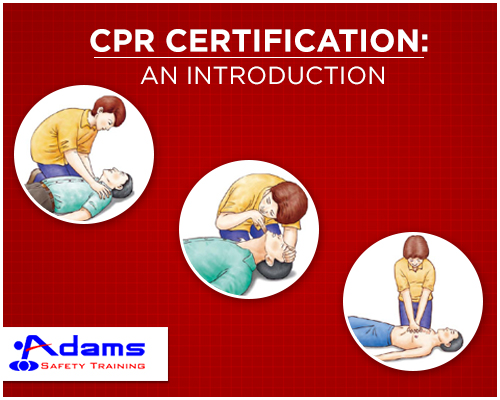
CPR Certification: An introduction

CPR provides the first-aid in case of a cardiac arrest. The stoppage of blood to the heart can be pumped by giving CPR to a patient. This little supply of the blood keeps the heart and brain functioning until the heart is revived due to the shock termed as Defibrillation.

Earlier in the day, cardio-pulmonary resuscitation was advised to be used on drowning patients by the Paris Academy of Science. For doctors, it was developed in 1960 after that recommendation for giving its training to ordinary citizens started coming up.
The doctors, therapists, health professionals require CPR certification, sometimes teachers, babysitters and nurses are also asked to get a certificate of this training. It is also advisable for an ordinary citizen to get this certificate and be prepared in case of any emergency.

There are levels of certification such as BLS, the basic life support, and AED, this level of training is required by health professionals to perform advanced electronic defibrillation unit on heart attack victims. The advance level is taught to the firefighters, health professionals, and the police. All the skills of a BLS, as well as the techniques for performing a two-person CPR and removal of obstruction in the airway, are taught under the AED training.
CPR Certification


Why Americans Should Not Ignore CPR Training

The importance of CPR training cannot be refuted. The heart attack is the cause of death for nearly 3 hundred thousand people in America every year, yet its denizens tend to slur over the importance of CPR training.

Health emergencies can knock on the door unwanted. Cardiac arrests can happen to anyone irrespective of the age. At the time of a heart attack, the heart goes into a shock and stops pumping blood; in that case, a defibrillator is needed to make the heart working again. Most of the time, it is not available on the spot. There is a very little time a person has after a cardiac arrest in which his heart and brain can be revived and further damage can be controlled. If in this time period he is given a cardio-pulmonary resuscitation his life can be saved. Giving CPR to a person means buying him time until the advanced help arrives at the emergency scene.

Why Americans Should Not Ignore CPR Training

As referred by AHA the American Heart Association, CPR is an important link in the chain of survival of a cardiac arrest victim. The first link is the reporter, who calls the emergency services, the second link is the person who performs the CPR and next link is the advanced help.

Reading about the articles on how to perform a CPR is not good enough; one should get the proper training and a certification to be able to save someone’s life

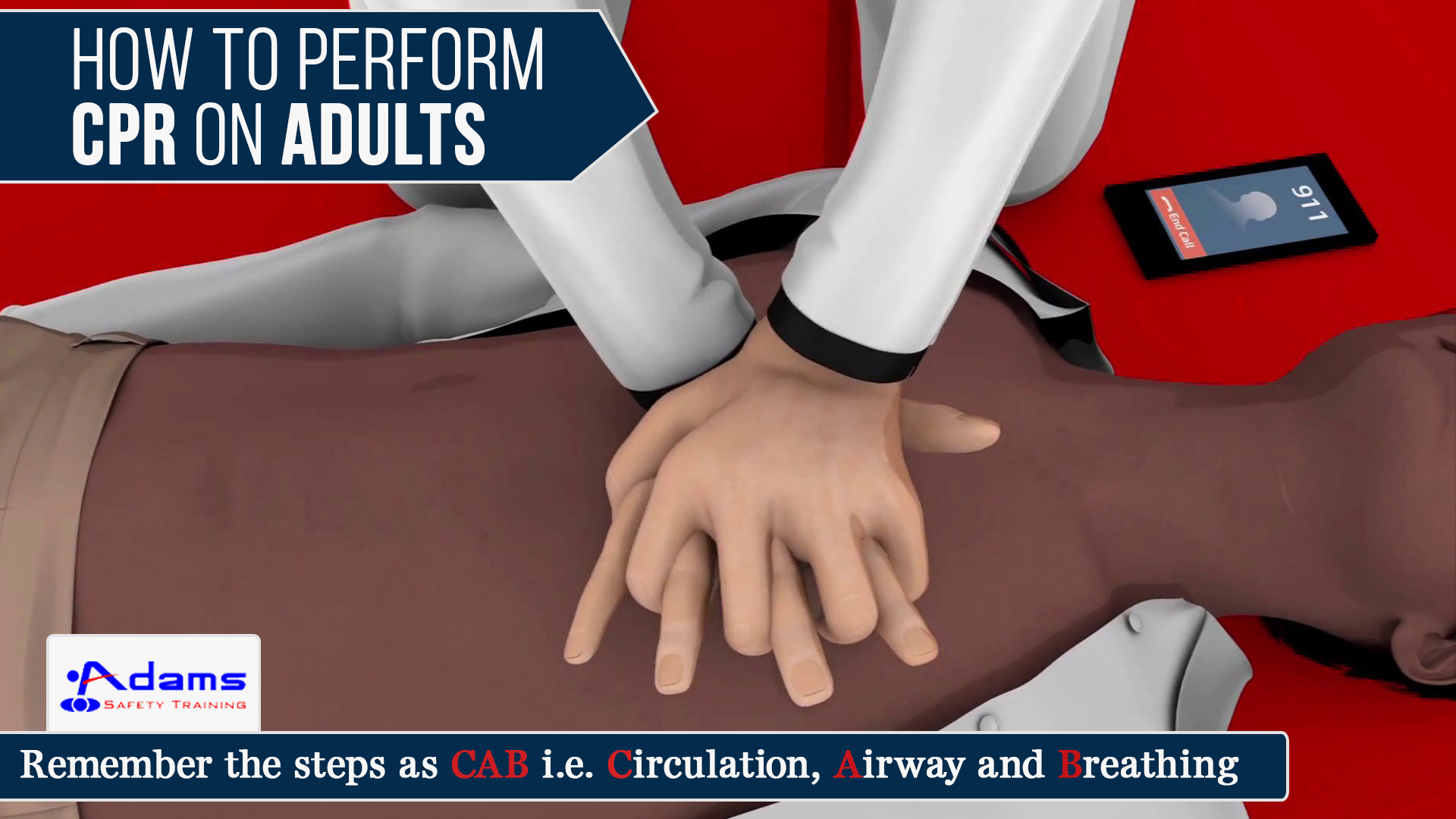
How to Perform CPR on Adults

The most terrifying thing about a cardiac arrest is that it can happen without any prior symptoms in number of people. It is the cause of maximum deaths in the world.

A lot of lives can be saved if person is given CPR by the BLS provider at the time of an arrest. This text is written with the aim of providing information about the CPR procedure.

Hope it will serve as useful guide in knowing how to do CPR. Also earlier we published an Infographic on How to perform CPR on adults

•    Cardiac arrest can happen because of many reasons such as drug overdose, excessive bleeding, injuries, stroke and near drowning
•    If you are not trained to give CPR you should not attempt giving breaths to the patients. You should only go for 100 uninterrupted hands compression
•    If you are trained for a CPR procedure then you can begin chest compression and giving rescue air breathing. Begin with 30 chest compressions
•    Remember the steps as CAB i.e. Circulation, Airway and Breathing
•    Restore circulation with compressions which should be 100 per minute and depth should be at least 2 inches
•    Allow compression recoil and minimize interruptions to less than 10 seconds
•    For clearing the airway, tilt the head and lift the chin
•    One breath should be given for 6 to 8 seconds

Follow the above guidelines and call for advanced care immediately. You can take CPR training by joining the first aid training courses. To know more visit www.adamssafety.com

How to perform CPR on adults

Get the CPR training with Adams Safety

Adams Safety Training is an authorized training site for California Emergency Medical Service Authority, (EMSA), Medic First Aid, American Safety & Health Institute (ASHI), and American Heart Association. It provides First Aid Training, CPR Classes, and BLS training to the entire San Francisco Bay Area.

This text is written with the aim of providing information about training courses and classes offered by Adams safety training.
It provides CPR training classes with minimal costs. All the equipments and material provided are included in that cost. No extra fee and contracts are involved.

The onsite training program is also available for the group of 10 or more in Northern California at the location of your choice. For healthcare classes certificates are issued. Along with BLS and CPR health care providers are also taught AED.

Adams Safety training is certified and approved by the State of California Emergency Medical Services Authority to provide child care classes in its day care centre.

There are lot of fraud instructors and trainers who do not compliance with EMSA training. You should be aware and do not take risks when comes to safety of your loved ones.

The goal of Adams safety is to provide low cost and best quality CPR training.

CPR Classes

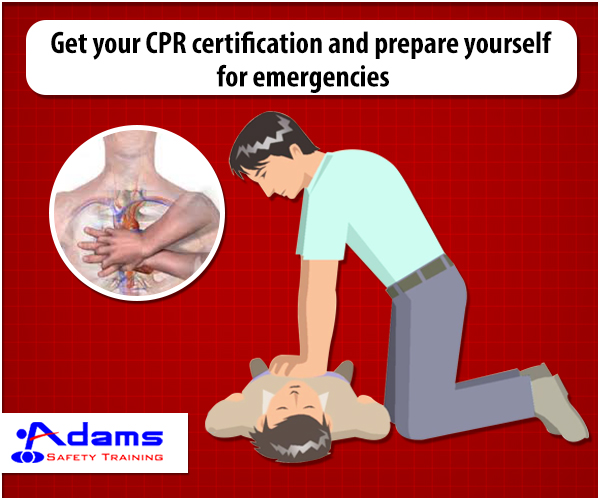
Get your CPR certification and prepare yourself for emergencies

Health Emergencies can knock on your door unwanted and unexpected. It’s better to be prepared to tackle them whenever needed.

This text blog is written with the intent of providing information about CPR and first aid certification. The training can be crucial for a new parent, babysitter or senior helper.

Things that you will be trained for:

• Examining the scene of an emergency
• Calling 911 and taking care of victim until help arrives
• Deterring bleeding and treating cuts, scrapes, bee stings, insect or snake bites, etc.
• Treating sudden illness and understanding signs and symptoms of heart attack

How to choose the course?

You can choose among the courses available online, also many hospitals and communities offer these first-aid and CPR programs. You can find website programs by American Heart Association (AHA) and other agencies.

Maintaining a first Aid Kit

In case you are not able to get certificate for the first aid or CPR programs you must always carry a first aid kit along. Your kit should have things like scissors, band aids, aspirins, gloves, antibiotic ointment, hand sanitizer, gauze, etc.

The first Aid kit can be very serviceable when comes to emergencies ranging from snake bites to earth quakes.

Blog 1

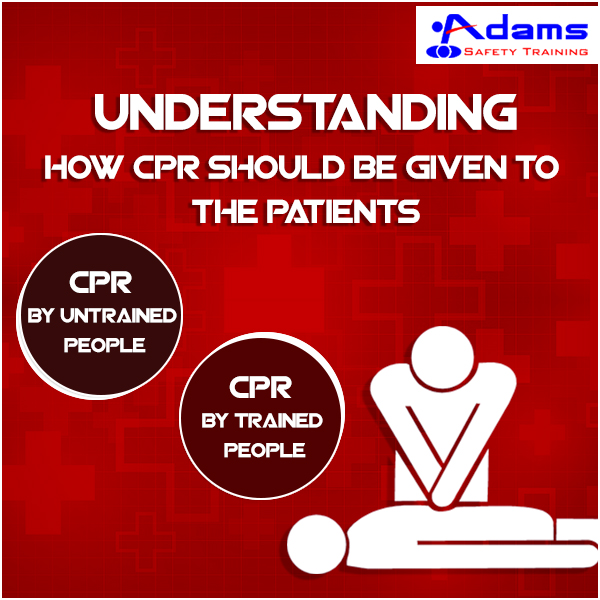
Understanding How CPR Should Be Given to the Patients

It is always essential to know of some first aid techniques that can at times be very useful to save lives of others. Cardiopulmonary resuscitation (CPR) is often regarded as a lifesaving technique that comes handy in many emergency situations such as:

  • Heart Attack
  • Near Drowning
  • Unable to breathe
  • Heart not beating

The American Heart Association also emphasizes on the need of undergoing CPR training, beginning with chest compression. Given below are the suggestions for giving Cardiopulmonary Resuscitation for different levels of people under the appropriate medical facilities can be approached:

•  CPR by Untrained people: Such people when falling into such situations are recommended to give hands-only CPR. This means they must compress the chest of the patient at the rate of 100 times per minute.

• CPR by Trained people: Those who know the process must give hand compressions at the rate of 30 times per minute, besides checking for the airway and giving rescue breathing.

Understanding How CPR Should Be Given to the Patients.

These methodologies are good for use on adults as well as children, but should not be tried upon newborns. Performing CPR is meant to ensure the flow of blood through the body and brain, which is essential to keep the patient in his senses

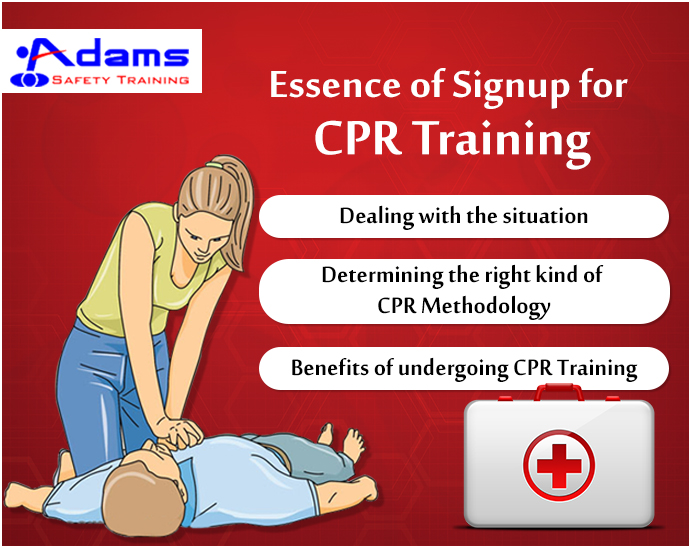
Essence of Signup for CPR Training

It’s not really often when someone would find himself in a situation where he would become responsible to save the life of someone else. But when this happens, it becomes important for him to know of methods like CPR or BLS, which can keep the person in senses until proper medical care arrives.

This is why the importance of undergoing CPR training can never be undermined.

Dealing with the situation

The entire situation can be highly stressful itself, which is why it also becomes necessary for the person to stay calm and remember what is expected of him. Several hospitals today offer such kind of training for individuals who want to help the society or who simply wish to undergo this training to be prepared for unforeseen circumstances.

Determining the right kind of CPR Methodology

There can be different kinds of conditions for which people may have the need for CPR. This is also why there are different training modules to handle such different circumstances with precision.

Benefits of undergoing CPR Training

Some of the most prominent benefits that a person can derive by undergoing CPR training are:

• He is well-trained to face any such situation better than others
• He is seen with high regards in the society
• He will even stand a chance to get preference when applying for a job

Essence of Signup for CPR Training

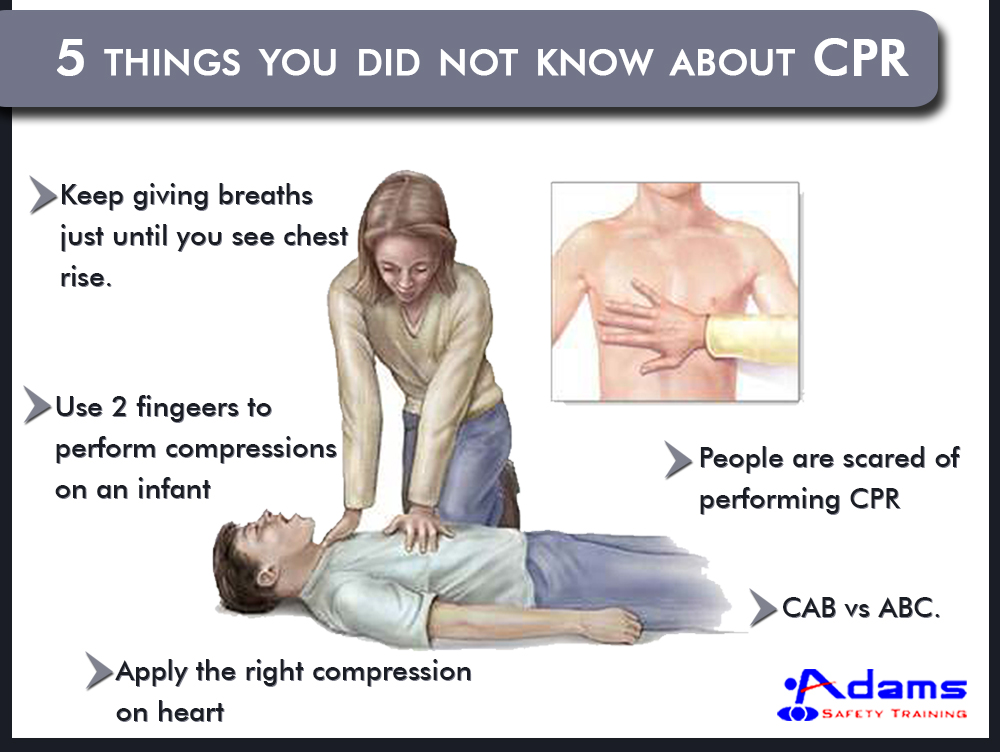
5 things you did not know about CPR

Cardiopulmonary Resuscitation (CPR) is a rescue procedure used when a person is not breathing or the heart has stopped beating effectively. This life-saving procedure keeps blood pumping through the heart until emergency medical assistance arrives. Learning the fundamentals of a life support skill could help you save a person’s life. Whether you’re trained in CPR or going to attend a CPR training class, you should know 5 interesting things about this basic life sustaining skill:

Keep giving breaths just until you see chest rise.
A rising chest indicates the lungs are full of air. If we continue to blow and over-inflate the lungs, the air will overflow into the stomach. Since our stomach is like a balloon, it can blow up to a point and then collapses. This collapse causes vomitting or can alos go  into the patient’s lungs, causing infection leading to death.

Use 2 fingers to perform compressions on an infant
Infants are fragile. Using the full weight of your hand can crush the infant. The pain we feel in our 2 fingers is the safety measure to prevent us from applying too much pressure on the infant.

Apply the right compression on heart
If you go too fast, you don’t give the heart enough time to refill with blood before your next compression. Essentially, you are pumping an empty heart. If you go too slow, you won’t build up the necessary blood pressure to allow for the exchange of oxygen and carbon dioxide to occur.

CAB vs ABC.
CAB stands for compressions, airway, breathing. Studies show that there is still oxygenated blood in a person’s body. We can give them breaths, but that is not going to do anything. Until we start compressions and raise their blood pressure, the oxygen they have will not get to those vital organs.

People are scared of performing CPR
There are people who are scared to perform CPR during an emergency because of  the legalities attached to it. The fear of getting sued, if they make a mistake while giving CPR makes them jittery. There isn’t any lawsuit against such mistakes or errors. Lawsuits are enforced on certified CPR professionals or when they make use of AED.

5 things you did not know about CPR


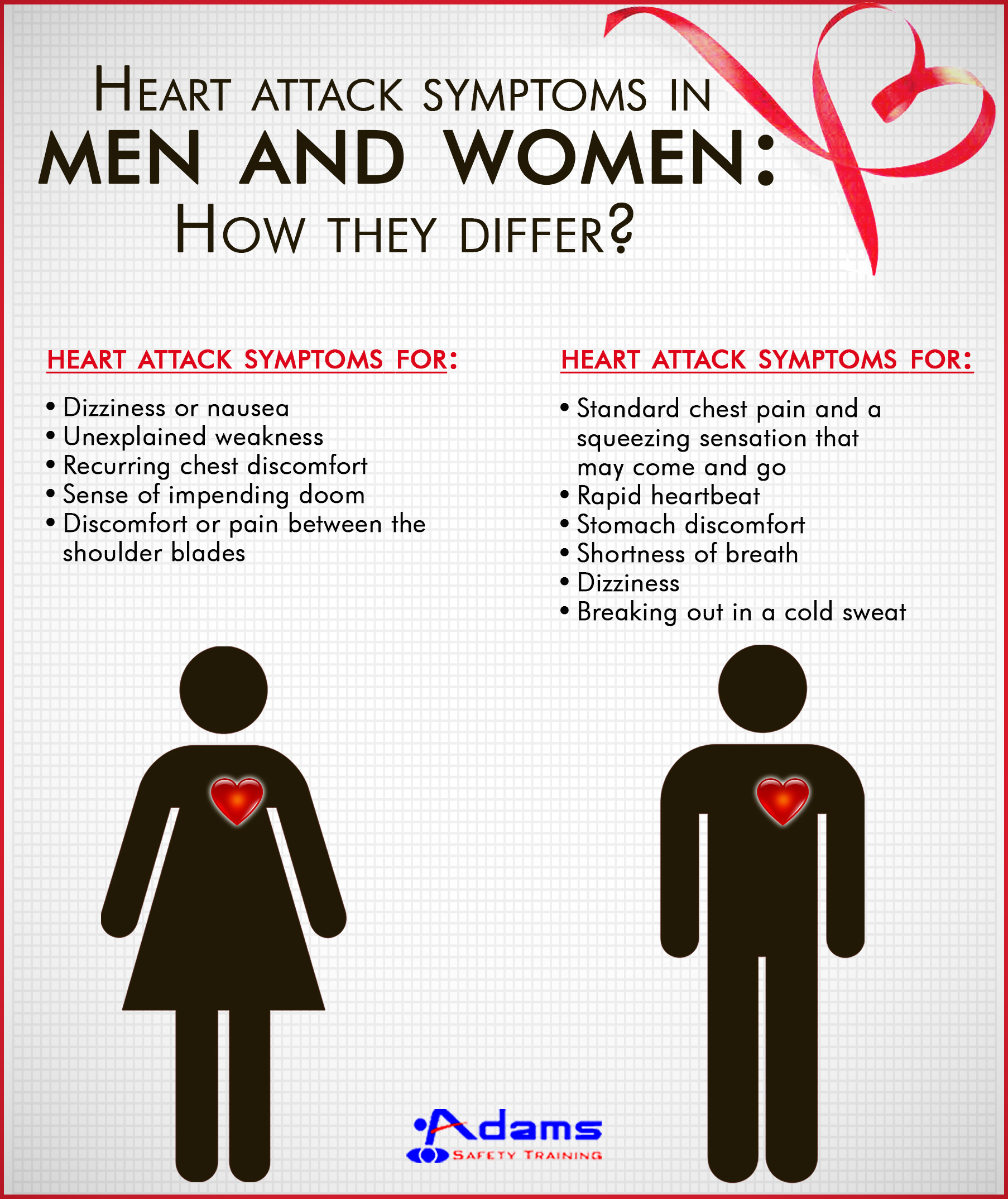
Heart attack symptoms in men and women: How they differ?

When it comes to heart problems, men and women are not equal. The classic thinking of most people say that chest pain is the common symptom of a heart attack both in men and women. However, more recent studies have suggested that women are more likely to experience a heart attack without chest pain than men. That’s why it’s important for people to understand the variety of symptoms of a heart attack. The early symptoms of heart attack in men and women may include discomfort in the chest, pain in the neck and shoulder area, stomach or abdominal pain, severe anxiety, breathlessness and nausea & vomiting.

Heart attack symptoms in men and women: How they differ?
Women are more likely to experience the following heart attack symptoms:

•    Dizziness or nausea
•    Unexplained weakness
•    Recurring chest discomfort
•    Sense of impending doom
•    Discomfort or pain between the shoulder blades

Men are more likely to experience the following heart attack symptoms:

•    Standard chest pain and a squeezing sensation that may come and go
•    Rapid heartbeat
•    Stomach discomfort
•    Shortness of breath
•    Dizziness
•    Breaking out in a cold sweat

Though men and women have different symptoms of heart attack, but sooner they get help from first aid responders/bystanders, the better are their chances to survive. Only people trained in CPR can recognize the signs and symptoms of heart attack and revive someone whose heart has stopped. Attend a CPR training course today to help someone survive heart attack emergency.

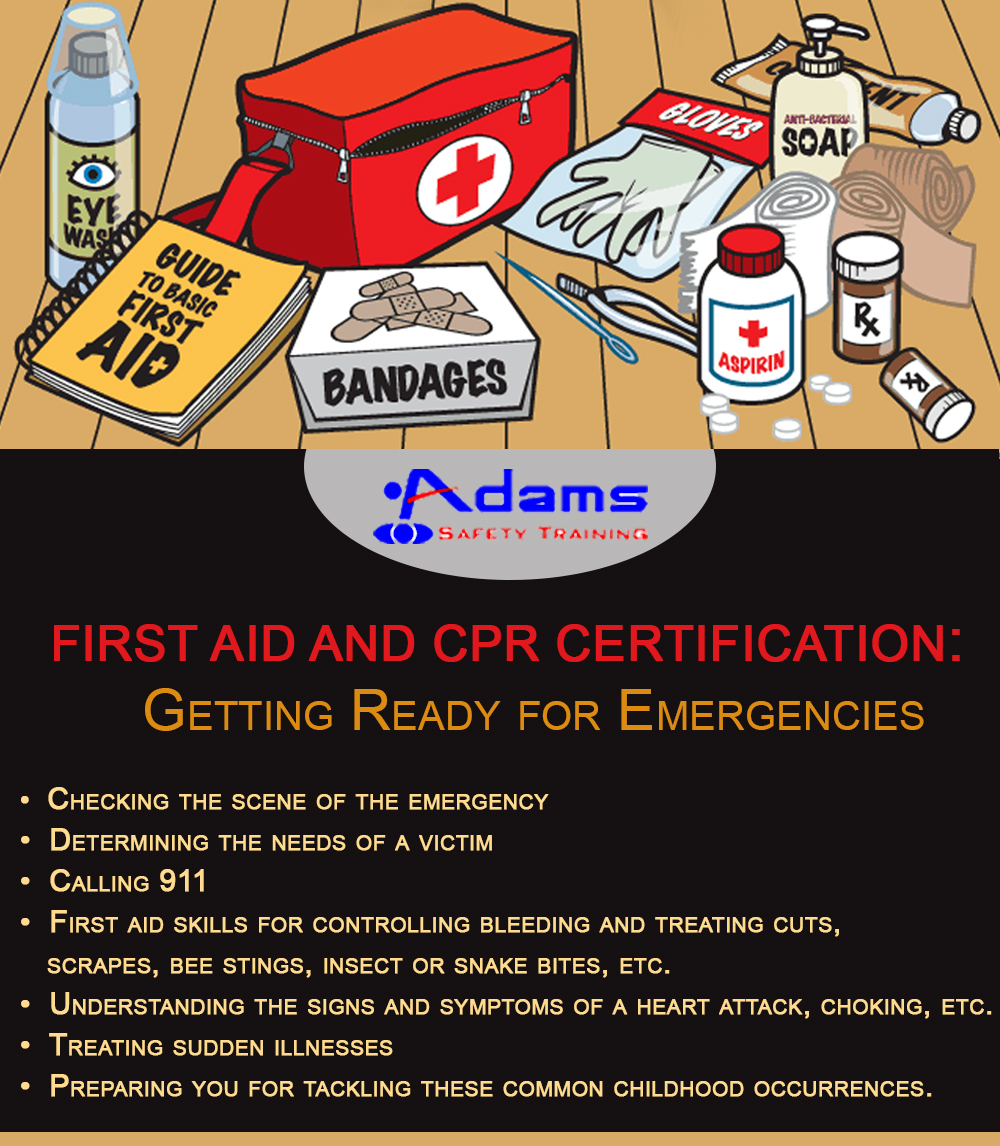
First Aid and CPR Certification: Getting Ready for Emergencies

Getting a first aid and CPR certification can prepare you for emergencies and make you a better caregiver. Nobody welcomes emergencies but being ready for them is much-required. A new parent, a senior care helper, a nanny or a babysitter, the value of CPR and first aid training is priceless in case of an emergency.

What will First aid and CPR training teach us?

•    Checking the scene of the emergency
•    Determining the needs of a victim
•    Calling 911
•    First aid skills for controlling bleeding and treating cuts, scrapes, bee stings, insect or snake bites, etc.
•    Understanding the signs and symptoms of a heart attack, choking, etc.
•    Treating sudden illnesses
•    Preparing you for tackling these common childhood occurrences.

Finding the right First Aid and CPR Course
You can choose from online or in-person courses all around you. Many local hospitals and community centers offer First Aid and CPR programs or they can guide you in the right direction. You can also find safety training courses through the websites of the American Red Cross, the American Heart Association and the National Safety Council. These agencies offer a wide range of courses, aimed at helping both adult and child victims.

Maintain a First Aid Kit
Even if you are not able to get First Aid and CPR Training, you need to have a completely stocked first aid kit in your car, home, office and nanny bag. It’s quite resourceful during emergency — from scraped knees to snake bites to car accidents and earthquakes. Your kit should include things like different size bandages, antibiotic ointment, aspirin, hand sanitizer, gauze, scissors, etc. You can also purchase ready-made ones online.

First Aid and CPR Certification: Getting Ready for Emergencies

While facing an emergency, dial 911 first. You need to have the skills to detect, assess and treat victims until professional medical personnel arrive.